
Best Roller Skating Academy in Gurgaon: How to Choose the Right One for Your Child
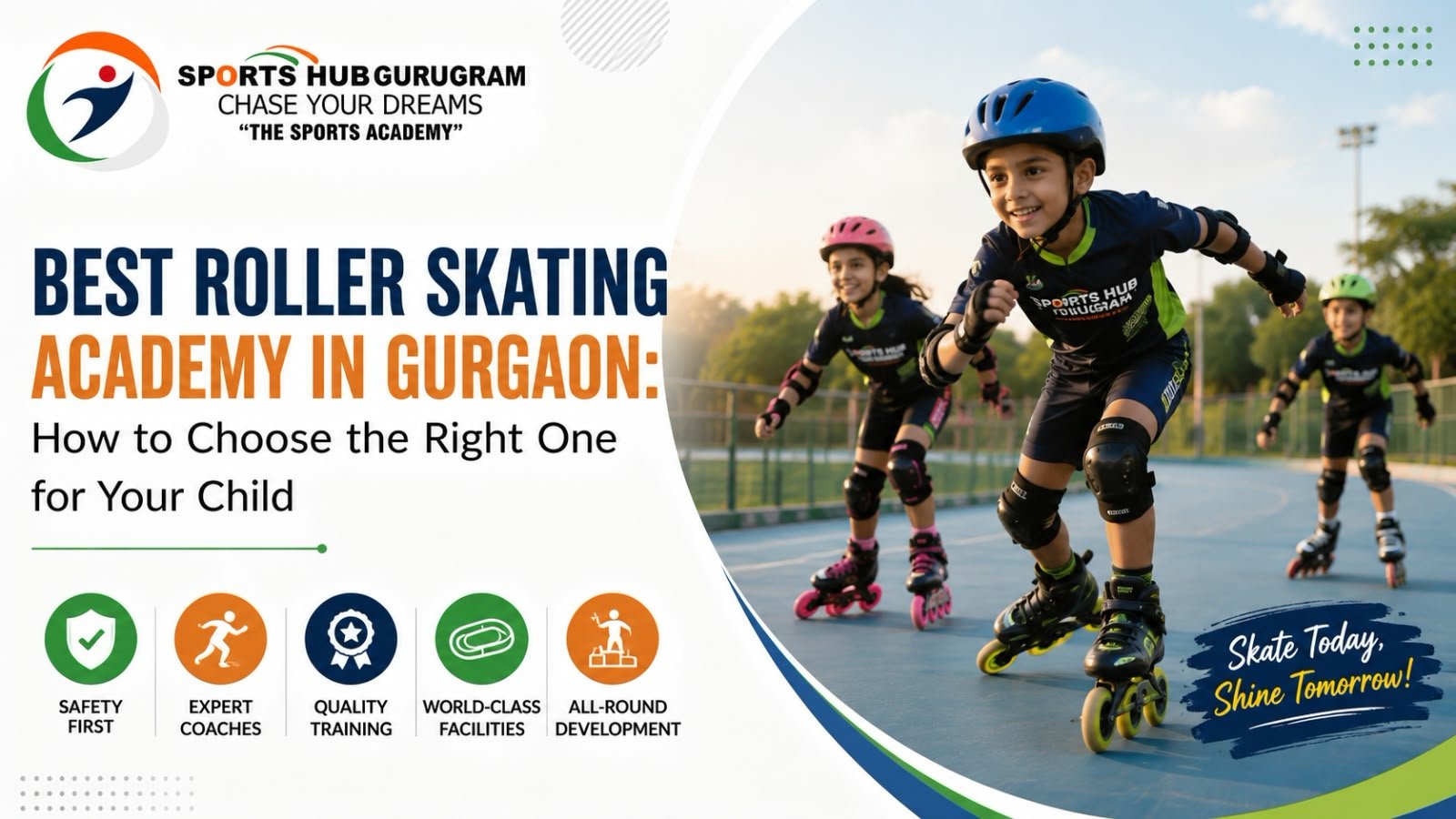
Choosing a sports programme for a child is rarely just about finding a convenient place and signing up. Parents want their children to learn a useful skill, stay active, enjoy the experience and, most importantly, receive sensible guidance while they develop. That is particularly true with roller skating, where balance, movement, stopping, turning and confidence all develop progressively. If you are comparing a Roller Skating Academy in Gurgaon, the right decision should therefore involve much more than looking at a timetable or a promotional claim.
A good programme should fit the child rather than expecting every child to fit the same training model. You should look at the coach, teaching method, safety practices, progression system, training environment, accessibility and opportunities for development. Sports Hub Gurugram, for example, offers roller skating alongside cricket, football, tennis, badminton and basketball, with its skating programme available at Sector 31 and Sector 48. Its website identifies Deepak Kumar as the coach leading the skating programme and describes a progression from beginners through competitive skaters.
This guide explains what parents should actually examine before making a decision. Instead of simply asking which academy is “best”, you will learn how to judge whether a programme is suitable for your child, because the right choice is the one that combines appropriate coaching, safety, consistency and an environment in which your child genuinely wants to keep learning.
Why the Right Skating Academy Matters for Your Child
The first few months of learning can shape how a child feels about a sport for years. Imagine putting a child on a bicycle without explaining how to balance, brake or turn and then expecting confidence to appear naturally. Skating is similar: children need opportunities to practise fundamental movements while receiving clear feedback from someone who understands how beginners learn. A suitable Skating Academy in Gurgaon should therefore provide more than time on wheels; it should create a progression in which a child can understand what they are learning, practise it repeatedly and gradually become more independent.
This matters because children do not all arrive with the same physical ability, confidence or previous experience. One child may step onto skates confidently but struggle with controlled stopping, while another may have good coordination but feel nervous about moving without support. A thoughtful coach recognises these differences instead of treating the entire group as though everyone is at the same stage. Sports Hub Gurugram describes its skating programme as progressive, covering beginners through competitive skaters, which gives parents a useful example of why progression should be part of the conversation when comparing programmes.
More Than Learning to Glide
For a beginner, skating can look deceptively simple. Put on the skates, push forward and keep moving — right? In reality, a child has to coordinate posture, balance, leg movement, body position, visual awareness and controlled changes in direction. Stopping is just as important as moving, and learning how to respond when balance changes is a fundamental part of becoming comfortable on wheels.
That is why parents should pay attention to what a programme teaches before expecting advanced tricks or speed. A sensible foundation includes basic stance, balance, controlled movement, turning and braking before a child is pushed towards more complicated drills. The American Academy of Pediatrics’ HealthyChildren guidance also highlights the importance of properly fitting skates, ankle support and protective equipment such as helmets, knee and elbow pads and wrist guards when children skate.
The learning environment matters, too. Children generally respond better when instructions are understandable and practice feels achievable rather than intimidating. A coach who can make a technical skill feel like a manageable challenge can turn an initially hesitant child into someone who looks forward to training.
Matching Coaching With Your Child’s Stage
Parents often make the mistake of choosing a programme based solely on how advanced its strongest students appear. That can be misleading. A child who is taking their first lessons does not necessarily need the same training intensity as a child preparing for competitions, and placing beginners into an unsuitable environment can make learning unnecessarily frustrating.
Ask how the academy groups students. Are beginners taught separately from more experienced skaters? Does the coach adjust drills according to ability? Is there a clear pathway from fundamental skills to more advanced work? These questions reveal much more about the quality of a programme than a phrase such as “professional training”.
Sports Hub Gurugram’s own published material describes beginner, intermediate and advanced training, with fundamentals introduced first and more demanding drills introduced as skaters progress. Its skating page also states that the programme is intended for different levels of experience.
For parents, this creates a simple principle: choose progression over pressure. A child should feel challenged, but the challenge should be appropriate. When progress is built one skill upon another, children can recognise their own improvement, which often becomes a powerful source of motivation.
What Parents Should Look for in a Skating Academy
Once you understand why coaching structure matters, the next question is practical: what should you inspect before enrolling? The answer is not a single feature. A strong programme is more like a puzzle, where coaching, safety, facilities, student grouping and progression all have to fit together. Parents searching for Skating Classes in Gurgaon should ideally compare these factors rather than choosing solely on price or proximity.
Start with the coach. A coach’s job is not simply to demonstrate skating movements; they need to communicate clearly, observe students and correct technique without discouraging them. Sports Hub Gurugram identifies Deepak Kumar as the coach for its roller skating programme, noting that he is pursuing a B.P.Ed degree and has a BA from DPG College, Gurgaon. The academy also describes his coaching focus as technique, discipline, perseverance and competition preparation.
Then consider the training structure. Children benefit when lessons have a clear purpose instead of becoming an unstructured period of simply skating around. A well-organised session might include warm-up activities, skill practice, controlled drills, repetition and progression, depending on the student’s level. Parents should not expect every session to look identical, but there should be a reason behind what the child is practising.
Coaching Quality and Teaching Approach
A technically knowledgeable coach and a good children’s coach are not automatically the same thing. Teaching young skaters requires patience, observation and the ability to break complicated movements into smaller steps. If a child repeatedly struggles with a skill, the useful question is not simply, “Why can’t they do it?” but rather, “What part of the movement needs to be explained or practised differently?”
This is where observation becomes valuable. During a trial or introductory session, watch how the coach communicates with children. Do instructions appear understandable? Does the coach pay attention to individual students? Are mistakes corrected constructively? Does the session feel organised without becoming unnecessarily rigid?
A good coach should also help children understand that progress is not always linear. Some days a child may master a movement quickly; on another day, the same skill may feel difficult. That is normal in sports development. The role of coaching is to create consistency so that small improvements accumulate over time.
Safety, Equipment and Training Environment
Safety should never be treated as an afterthought in a skating programme. Children are learning to control movement on wheels, so falls can happen even when instruction is good. The goal is not to pretend that every fall can be eliminated; it is to teach appropriate skills, use suitable equipment and create an environment where children can practise responsibly.
Parents should check whether skates fit properly and whether protective equipment is appropriate for the child’s size. HealthyChildren advises that children’s feet should feel comfortable inside the boot and that the ankle should be adequately supported; it also recommends helmets and protective pads as standard safety equipment for young skaters.
The surface and available practice area deserve attention as well. A parent does not need to become a skating-equipment expert, but asking straightforward questions can reveal whether safety has been incorporated into the programme. What equipment is expected? How are beginners introduced to stopping? How are students managed during practice? What happens when a child feels uncomfortable or loses confidence?
These questions are not signs of an overprotective parent. They are signs of a parent making an informed decision.
Structured Progression and Age-Appropriate Batches
Children learn differently at different stages, so age and ability grouping can make a meaningful difference. A very young beginner may need more time with basic balance and confidence, while an older child with previous experience may benefit from more demanding technical drills. A programme that recognises these differences can make practice more productive for everyone.
Sports Hub Gurugram states that it trains children from age five upwards and creates age-appropriate batches, while its broader academy programme includes beginner through competitive-level coaching. This is the type of information parents should seek from any academy before enrolling.
A structured progression should also give you a reasonable idea of what happens after the first stage. Your child might begin by learning stance and balance, then move towards controlled gliding, turns and braking before progressing into speed or competition-oriented work. The exact sequence can vary with the child’s development, but the underlying idea remains the same: each stage should prepare the child for the next.
How to Evaluate Training Quality Before Enrolling
A website can tell you what an academy offers, but a visit can tell you how that offer actually feels. This is why parents should, whenever possible, observe the environment before making a long-term commitment. You are not merely evaluating a sports facility; you are deciding whether your child will feel comfortable learning there several times a week.
One useful approach is to treat the first visit like a short fact-finding exercise. Watch the interaction between coaches and students, observe how beginners are handled and notice whether the session appears organised. You should also consider whether the schedule is realistic for your family because even an excellent programme will struggle to deliver consistent progress if attendance becomes difficult.
Sports Hub Gurugram offers a free trial class for new students, allowing parents and children to experience a session before committing to enrolment. The academy lists its roller skating programme at Sector 31 and Sector 48, Gurgaon, making a trial particularly useful for assessing which location fits a family’s routine.
Observe a Trial Session
A trial session should not be judged only by whether your child performs well. A first lesson is a learning experience, not an audition. Instead, watch how your child responds to the coach, whether instructions are understandable and whether the environment encourages them to try again after a mistake.
Look for small signs of effective teaching. Does the coach demonstrate a movement before asking children to perform it? Are students given enough space to practise? Is the coach attentive when someone struggles? Does the session progress logically rather than jumping randomly between activities?
Your child’s reaction after the session is another useful signal. They might not immediately say, “The coaching methodology was excellent,” but they may tell you that they enjoyed a particular exercise, felt comfortable with the coach or want to return next week. Those reactions matter because long-term development depends on regular participation.
Ask About Progress, Practice and Competition
Parents should also ask what progress looks like within the programme. How does the coach decide when a child is ready for a more advanced group? Are children given opportunities to practise specific skills repeatedly? If a child becomes interested in competition later, is there a pathway for that development?
Competition should not be treated as compulsory for every child. Some children skate primarily for activity, confidence and enjoyment, while others eventually want to test themselves in events. A flexible programme should be able to respect both goals.
Sports Hub Gurugram publishes information about its SHG Open Skating Championships and other sporting events, indicating that its students can receive competitive exposure beyond ordinary training sessions. That does not mean every child needs to compete; rather, it shows why parents should ask whether an academy can support changing goals as a child develops.
Consider Location and Routine
Convenience is not a superficial consideration. If the academy is too far away or the class timing consistently clashes with school, homework or family commitments, regular attendance can become difficult. A nearby programme that your child can attend consistently may be more useful than a theoretically ideal programme that creates an exhausting weekly commute.
Sports Hub Gurugram currently lists centres at Sector 31, Gurgaon and GD Goenka Public School, Sector 48, Gurgaon. The academy states that roller skating is available at both locations, alongside other sports offered according to the centre. Its published academy timings are Monday to Friday from 4:00 PM to 8:00 PM and Saturday from 10:00 AM to 8:00 PM, with Sundays closed.
For families comparing Roller Skating Classes Near Me, the practical question is therefore not simply distance. Consider travel time, school schedules, homework, rest and how easily the child can maintain a regular routine. A sustainable schedule gives skills the repetition they need to develop.
Understanding the Benefits of Roller Skating for Children
Roller skating can offer children much more than an enjoyable activity after school. When children learn to skate consistently and under suitable guidance, they practise balance, coordination, body control, spatial awareness and movement planning at the same time. These abilities are useful within skating itself, but they can also contribute to a child’s broader physical literacy — the confidence and competence to move their body effectively in different situations. For parents considering Roller Skating Classes in Gurgaon, this wider developmental value is worth considering because the goal does not always have to be competition or advanced performance.
The benefits also depend on how the activity is introduced. A child who is constantly rushed towards speed may become anxious, whereas a child who is allowed to master foundational movements gradually can develop greater control and confidence. The most productive environment is one in which children are encouraged to practise, make mistakes safely, learn from feedback and recognise their own progress. That makes the experience more sustainable than treating every session as a test of ability.
Physical Development and Coordination
Skating requires the body to work as a coordinated system. A child has to maintain an appropriate posture while controlling their legs, adjusting their centre of balance and responding to movement. Turning introduces another layer of coordination because the skater must manage direction without losing control. Stopping requires deliberate movement rather than simply slowing down and hoping the skates eventually come to a halt.
Regular physical activity is also important for children’s general wellbeing. The World Health Organization recommends that children and adolescents aged 5–17 undertake an average of at least 60 minutes per day of moderate-to-vigorous physical activity across the week, with vigorous aerobic activities and activities that strengthen muscles and bones included on at least three days each week. Skating can be one enjoyable way for an active child to contribute to their overall movement routine, although it should not be viewed as a substitute for a balanced range of physical activities.
The coordination involved in skating can be especially engaging because children receive immediate physical feedback. If their stance changes, they may feel less stable; if their movement becomes more controlled, skating feels smoother. That immediate connection between technique and outcome can make learning satisfying. Instead of sitting through an explanation of balance, the child experiences balance directly.
Confidence, Discipline and Focus
Physical skills are only one part of the picture. Children also have to develop patience because some skating movements take repeated attempts before they become comfortable. A child might spend several sessions working on a movement that initially feels awkward, then suddenly realise that it has become easier. Those moments can reinforce a valuable lesson: improvement often comes from consistent practice rather than instant success.
A structured training environment can also introduce children to habits such as listening carefully, following instructions, warming up appropriately, respecting other participants and looking after their equipment. These habits are not unique to skating, but sport gives children an opportunity to practise them in a practical setting.
Confidence should also be distinguished from recklessness. A confident young skater is not someone who ignores risk; they are someone who understands their abilities and makes controlled decisions. Good coaching should help children build confidence through competence, rather than encouraging them to attempt movements beyond their current level simply to appear advanced.
For younger children, this can be particularly important. Parents looking for Skating Classes for Kids in Gurgaon should look for programmes where encouragement and discipline work together. Too little structure can make learning chaotic, while excessive pressure can remove the enjoyment that keeps a child engaged.
Recreation Versus Competitive Development
Not every child who learns skating needs to become a competitive athlete. Some children simply want an active hobby, while others discover that they enjoy training seriously and eventually want to participate in competitions. Both pathways are valid, and parents should avoid deciding too early which one their child should follow.
A well-designed programme can accommodate changing ambitions. A beginner can focus on fundamental skills and confidence, then move into more advanced training if their interest and ability develop. If competition becomes a goal later, the child can begin working on the additional technical, physical and mental demands that competitive sport may involve.
This flexibility is particularly useful because children’s interests can change quickly. A child who initially joins because a friend is skating may later discover a genuine passion for the sport. Another child may enjoy skating for a year and then want to explore football, tennis or another activity. The experience can still be valuable because it has contributed to their movement skills and exposure to structured sport.
Sports Hub Gurugram operates as a multi-sport academy, with its website listing roller skating alongside football, cricket, tennis, badminton and basketball. That broader sporting environment can be useful for families who want children to experience different activities rather than treating one sport as their only option.
Why Sports Hub Gurugram Can Be a Practical Choice
Once parents know what to evaluate, the next step is to look at the information an actual academy makes available. Sports Hub Gurugram presents its roller skating programme as a structured coaching option for children, with training described across different ability levels. Its published information identifies the programme’s coach, locations and progression approach, giving parents concrete details to consider rather than requiring them to rely solely on general promotional language.
The academy’s website describes roller skating coaching for beginners, intermediate participants and advanced or competitive skaters. It also identifies age-appropriate batches and states that children from age five upwards can participate. These details are particularly relevant when choosing a programme because a child’s first experience should match their developmental and skill level rather than forcing every student into the same training pattern.
Parents should still evaluate the programme personally. Website information can help you shortlist an academy, but observing a session and discussing your child’s needs with the coaching team will give you a more complete picture.
A Progressive Approach to Skating
Sports Hub Gurugram describes its coaching approach as progressive, beginning with fundamentals before moving towards more advanced techniques. That principle makes sense for children because complex movement is generally easier to learn when the underlying skills are already familiar. A child who can balance, control speed and stop confidently has a stronger foundation for learning more demanding skating movements.
Progression should not be confused with simply making every lesson harder. Good progression is about making the right thing harder at the right time. For one child, that may mean improving stopping control; for another, it might mean refining turns or developing speed. The coach’s observations should influence the next stage rather than an arbitrary timetable.
This is also why parents should avoid comparing children too closely. Two children of the same age can have very different levels of coordination, confidence and previous experience. A child who progresses slowly at first may eventually develop quickly once their foundation becomes secure. The important question is whether the training environment allows that individual development.
Coaching and Competitive Exposure
For children who eventually become interested in competitive skating, the transition from recreational participation to more focused training should be gradual. Competition can introduce additional motivation, but it can also create pressure if children feel that results are more important than learning. Parents should therefore ask how an academy introduces competition and whether participation is appropriate for the child’s age, interest and readiness.
Sports Hub Gurugram publishes information about its skating competitions and identifies events such as its SHG Open Skating Championships. The academy’s skating content also refers to preparation for competitions as part of its advanced pathway.
This can be useful for a child who wants a sporting goal to work towards. At the same time, competition should remain part of a broader development process. Technical improvement, enjoyment, discipline and healthy participation remain important regardless of whether a child eventually enters an event.
Parents should also ask what happens if their child does not want to compete. A strong programme should not make competitive participation the only measure of success. A child who becomes more active, develops coordination and gains confidence has already achieved something worthwhile.
Two Gurgaon Training Locations
Location can have a surprisingly large effect on whether a child attends consistently. Sports Hub Gurugram lists roller skating at its Sector 31 and Sector 48 locations in Gurgaon, giving families in different parts of the city an opportunity to consider which centre fits their routine. The academy’s website provides centre-specific information so parents can check the available sporting activities and schedule before visiting.
This matters because consistency is one of the most practical ingredients in learning a physical skill. If travelling to a session takes too much time, the programme can become difficult to maintain alongside school, homework and other activities. Choosing the location that fits naturally into the family’s weekly routine may therefore be more sensible than choosing solely on reputation or convenience on paper.
Families searching for Kids Roller Skating Classes Gurgaon options should also consider what happens around the lesson itself. Can the child arrive without being rushed? Is there enough time to prepare? Can they rest afterwards? Does the schedule leave room for school responsibilities and other activities? These practical details can make the difference between a short-lived enrolment and a sustainable sporting routine.
A Parent’s Checklist Before Choosing a Skating Programme
The final decision should come after looking at the complete picture rather than one attractive feature. Coaching quality, safety, age grouping, progression, location and your child’s own response to the environment should all be considered together. Think of the process as choosing the right pair of skates: the most expensive or impressive-looking option is not necessarily the right fit. The programme needs to suit the child who will actually use it.
Before enrolling, parents can ask the academy a few straightforward questions. The answers do not need to sound complicated. In fact, clear answers are often more useful than impressive terminology because they help you understand exactly what your child will experience.
Questions to Ask the Academy
Consider asking:
- What age groups and ability levels are currently trained?
- How are beginners introduced to skating?
- How are children grouped during sessions?
- What equipment should the child bring?
- How is progression assessed?
- How frequently should a beginner attend to practise consistently?
- Is there an opportunity to try a session before enrolment?
- What happens if a child is nervous or struggling with a particular skill?
- Is competitive training available for children who later want it?
- Which location and timing would be most suitable for the child’s routine?
These questions are useful because they turn vague promises into practical information. If an academy can explain its programme clearly, you have a better basis for deciding whether it suits your family.
You should also ask your child what they think. A parent may care about convenience and coaching structure, while the child may care most about whether they feel comfortable and enjoy the activity. Neither perspective should be ignored. Children are far more likely to maintain an activity when they feel that they have some ownership of the experience.
When Your Child Is Ready to Progress
Progress should be based on demonstrated ability rather than simply the number of lessons attended. A child may need more time with basic balance even after several weeks, while another may be ready for more challenging drills sooner. The coach should be able to explain what the child is doing well, what needs improvement and what the next realistic goal is.
Parents can support this process without turning every practice session into an assessment. Ask questions such as, “What did you learn today?” or “Which skill are you practising?” rather than repeatedly asking whether the child is now advanced. This keeps attention on learning rather than labels.
If your child starts talking about improving a particular skill at home, that can be a positive sign. So can wanting to return to the next session, remembering coaching instructions or showing greater confidence when putting on the skates. Progress is not always dramatic; sometimes it appears as a small reduction in hesitation or a more controlled movement.
For families searching for a Roller Skating Academy Near Me, these principles remain useful regardless of which academy appears first in a local search. Proximity can help, but suitability should ultimately determine the decision.
Start With the Right First Step
Choosing children’s sports coaching does not need to be complicated. Start by identifying what your child wants from skating, then compare programmes according to coaching, safety, progression, location and overall fit. A trial session can be especially helpful because it allows both parent and child to experience the environment before making a longer commitment.
For a beginner, the ideal first experience is not necessarily one filled with impressive tricks or fast skating. It is one where the child feels safe, understands what the coach is asking them to do and leaves with enough enthusiasm to want to return. Those simple ingredients can provide a much stronger foundation than trying to accelerate the learning process.
Parents should also keep the wider sporting picture in mind. Children can benefit from being exposed to different sports as they grow, and a multi-sport academy can make that exploration easier. At Sports Hub Gurugram, families can explore skating alongside activities including football, cricket, tennis, badminton and basketball, depending on the centre and programme availability.
Start Your Child’s Skating Journey With Sports Hub Gurugram
If you are comparing programmes for your child, Sports Hub Gurugram provides an opportunity to explore structured roller skating coaching in Gurgaon. The academy publishes information about its skating coach, progressive training levels, age-appropriate batches and locations at Sector 31 and Sector 48. It also offers a free trial class, giving families a practical way to experience the training environment before deciding whether it is the right fit.
The best next step is simple: discuss your child’s age, previous experience and goals with the academy, then arrange a trial where appropriate. Rather than choosing based solely on a search result, use the visit to observe the coaching style, ask questions and see how your child responds to the session. If the environment feels suitable and the schedule works for your family, consistent training can then become a natural part of your child’s weekly routine.
Conclusion
Choosing the right skating programme for a child is ultimately about fit, safety, coaching and progression. Parents should look beyond advertising and examine how beginners are taught, how children are grouped, what safety practices are followed, how progress is managed and whether the programme fits comfortably into the family’s routine. Just as importantly, the child should feel encouraged to learn rather than pressured to perform.
Sports Hub Gurugram offers a structured roller skating programme with published information about coaching, progressive levels, age-appropriate batches, competitive opportunities and two Gurgaon locations. A trial session can help families make a more informed decision by allowing them to experience the programme directly.
The right academy does not promise overnight mastery. Instead, it gives a child the opportunity to build skills gradually, develop confidence and discover whether skating can become something they genuinely enjoy. For many parents, that is a far more meaningful definition of success.
Frequently Asked Questions
FAQ 1: What age can children start roller skating?
Many children can begin learning basic skating skills from around five years of age when they can follow simple instructions and participate safely. The appropriate starting point depends on the individual child’s coordination, confidence and readiness. Sports Hub Gurugram states that its skating programme accepts children from age five upwards, with age-appropriate batches.
FAQ 2: How often should a child attend skating classes?
There is no single schedule that suits every child. Regular attendance is generally more useful than occasional participation because physical skills develop through repeated practice. Parents should choose a frequency that works alongside school, rest, homework and other activities so that training remains sustainable rather than becoming an additional source of stress.
FAQ 3: What equipment does a child need for skating?
Children need properly fitted skates and suitable protective equipment. A helmet, knee pads, elbow pads and wrist protection are commonly recommended for young skaters, while the exact equipment requirements can vary according to the programme and skating discipline. Parents should check the academy’s specific requirements before purchasing or bringing equipment.
FAQ 4: Should a beginner join an advanced skating batch?
Usually, beginners benefit from training with other children at a comparable ability level. Early lessons should concentrate on fundamental skills such as balance, controlled movement and stopping before more demanding techniques are introduced. An academy with progressive levels can move a child forwards when their skills and confidence indicate that they are ready.
FAQ 5: Can roller skating become a competitive sport for children?
Yes. Children who develop a strong interest in skating can eventually pursue more advanced and competitive training. However, competition does not need to be the goal for every child. A recreational skater can still gain valuable physical skills, confidence and enjoyment from regular participation.
FAQ 6: How can I choose the right skating academy for my child?
Start by comparing coaching quality, safety practices, age and ability grouping, progression, location, timings and your child’s response to the training environment. A trial class can be particularly useful because it lets you observe the session and see whether your child feels comfortable with the coach and activities. The most suitable programme is one that your child can attend consistently and where the training matches their current needs and future interests.