
Cricket Coaching for Kids in Gurgaon: Complete Guide for Parents
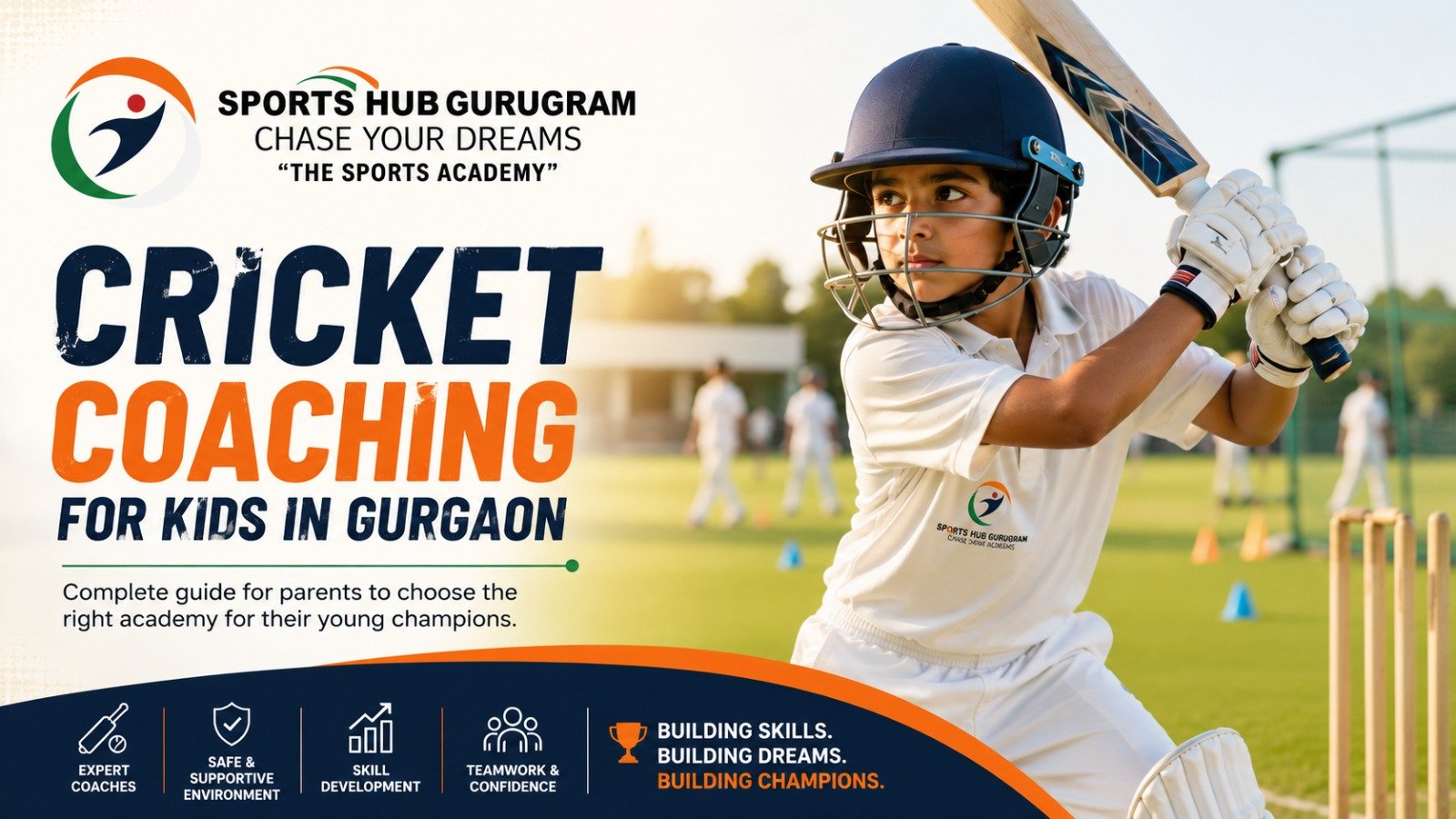
Choosing the right cricket programme for a child is about much more than finding a nearby ground and a coach with a bat in hand. Parents usually want their children to enjoy the sport, learn correct fundamentals, stay active and gradually become more confident in competitive situations. Cricket coaching for kids in Gurgaon can provide that structure when training is age-appropriate, consistent and focused on the child’s overall development rather than simply winning matches. Sports Hub Gurugram operates as a multi-sport academy with cricket coaching at its Sector 31 and Sector 48 locations, with cricket training available for children aged 6 and above. Its cricket programme covers batting, bowling, fielding and match practice, with coaching led by Vikash Kumar, whose profile on the academy website states that he has nine years of cricket coaching experience and is a Delhi University graduate.
For parents, however, choosing a programme should not begin with the question, “Which academy is the best?” A better starting point is, “What does my child actually need at this stage?” A six-year-old who is discovering cricket for the first time needs a very different experience from a teenager preparing for competitive matches. The right environment should allow children to learn progressively, make mistakes without fear and develop skills at a pace that suits their age and ability. It should also make room for school, family time, rest and other interests because a young athlete is still developing physically, emotionally and socially. This guide explains what parents should look for, how training can change as a child grows, and how to assess whether an academy’s coaching approach genuinely matches the needs of a young player.
Why Structured Cricket Coaching Matters for Children
Children can learn a surprising amount simply by playing cricket with friends. Informal games help them discover the basic joy of hitting a ball, throwing, catching, running between wickets and working with teammates. Yet informal play does not always teach technically sound movement patterns, and children may unknowingly repeat habits that become difficult to correct later. Structured coaching provides a framework in which fundamental skills can be introduced progressively and practised with guidance. At Sports Hub Gurugram, the cricket programme is described as covering batting, bowling, fielding and match practice, rather than concentrating on only one part of the game. For a parent, that broader approach matters because cricket is not a collection of isolated tricks; it is a connected game in which technique, movement, decision-making and concentration influence one another. A child who learns how to hold the bat but does not understand balance, footwork or shot selection has only learnt one small piece of the puzzle. Similarly, a young bowler needs more than the ability to release the ball; they need to understand rhythm, body control, accuracy and eventually how to respond to different match situations. Good coaching therefore acts like a roadmap: it gives a child direction without taking away the fun and freedom that made them love cricket in the first place.
Building Skills Beyond Batting and Bowling
A well-designed junior programme should develop the complete young player rather than treating batting and bowling as the only measures of progress. Fielding deserves attention because catching, throwing, stopping the ball and moving quickly across the ground are fundamental parts of every match. Children also need to learn how to listen, communicate with teammates, follow instructions and remain engaged when they are not directly involved in a delivery. These habits can gradually influence how they approach challenges outside sport as well. Sports Hub Gurugram’s own cricket content describes its training philosophy around batting technique, bowling mechanics, fielding drills and match temperament, giving parents a useful indication of the range of skills addressed by its cricket programme. The word “temperament” is particularly important for young players because cricket can test patience: a batter may get out quickly, a bowler may concede boundaries, or a fielder may miss a catch. Children need to understand that one mistake does not define their ability. A coach who creates an environment where mistakes become opportunities to learn can help young players stay curious instead of becoming afraid of failure. Over time, this combination of technical learning and emotional resilience can make training more meaningful, because children begin to understand not just how to perform a skill, but also how to respond when the skill does not work perfectly.
Discipline, Confidence and Teamwork
One of the biggest benefits of organised sport for children is that progress usually depends on consistency rather than instant results. A child may not improve their batting technique after one session, just as a new bowler will not develop reliable control after throwing a handful of balls. Regular practice teaches children that improvement is often gradual, and that lesson can build patience and discipline. Cricket also naturally introduces teamwork because players have different roles and must contribute even when they are not the star performer. A child who learns to encourage a teammate after a dropped catch is developing a different but equally valuable sporting skill from a child practising a cover drive. Confidence should develop from effort, learning and small improvements rather than from constant praise or pressure to win. Parents can reinforce this by asking questions such as, “What did you learn today?” or “Which skill felt better this week?” instead of focusing only on runs scored or wickets taken. Sports Hub Gurugram describes its broader academy philosophy as developing sporting ability alongside sportsmanship and structured training, while its cricket programme focuses on young players across different stages of development. This is an important distinction for parents: the purpose of junior sport is not simply to create a scorecard; it is to help a child become a more capable, disciplined and confident participant.
When Should a Child Start Cricket Training?
There is no single age at which every child should begin formal cricket coaching. Interest, physical development, attention span, confidence and previous experience all influence whether a particular programme is appropriate. Younger children generally benefit from playful activities that develop coordination, balance, movement and familiarity with the ball before training becomes heavily technical. As children mature, coaches can gradually introduce more structured batting, bowling, fielding and match-related exercises. Sports Hub Gurugram states that its cricket academy provides professional coaching for ages 6 and above, while its wider academy describes age-appropriate batches for children. For parents, the key point is not simply whether an academy accepts a particular age group, but whether the coaching actually reflects that age group’s needs. A child should not be expected to train like an adult simply because they are enthusiastic about cricket. The session should match their physical capabilities and ability to concentrate, while allowing room for enjoyment and experimentation. Parents should also watch how their child reacts after several sessions. If the child looks forward to training, talks about what they learnt and remains interested even when something is difficult, the programme may be a good fit. If they consistently appear anxious, exhausted or uninterested, it may be worth discussing the training structure with the coach rather than assuming that more pressure will solve the problem.
What Children Should Learn at Different Ages
The most useful cricket training changes as children develop. A younger beginner should not be judged by the same technical standards as an older player who has already spent years practising the sport. Early training is often about helping children control their bodies and understand the basic relationship between movement and the ball. Coaches can introduce simple skills through games and drills so that learning feels active rather than like a classroom lesson transferred to a cricket ground. As children become more comfortable, training can become more specific, with greater attention to batting stance, grip, footwork, bowling action, throwing accuracy, catching and basic tactical decisions. Sports Hub Gurugram’s published cricket material describes age-based development, including a foundation stage for children aged 6–10 that focuses on balance, coordination, grip, stance and basic motor skills. This kind of progression makes sense because technical instruction is more effective when it rests on a strong movement foundation. Imagine trying to build a house on uneven ground: adding more floors does not fix the foundation underneath. In much the same way, advanced cricket drills cannot fully compensate for poor balance, coordination or movement habits. Parents should therefore look for programmes that demonstrate patience with beginners and a clear progression as players become more capable.
Foundation Skills for Younger Players
For younger children, the first objective should be familiarity and enjoyment. They need opportunities to learn how to move towards a ball, stop it, throw it safely and maintain balance while holding or swinging a bat. Simple catching exercises can develop hand-eye coordination, while running games can introduce movement and agility without making the child feel as though they are completing a fitness test. Coaches can also teach basic cricket vocabulary and rules gradually, allowing children to understand what is happening during a game without overwhelming them with tactical detail. At this stage, repetition is useful, but repetition should not mean monotonous practice. A good coach can turn the same fundamental skill into different games, challenges and situations so that children practise without feeling that every session is identical. This is particularly valuable for beginners because early experiences can shape how they feel about sport for years afterwards. If every session is associated with criticism or unrealistic expectations, a child may begin to view cricket as a source of pressure rather than enjoyment. If training combines clear instruction with encouragement, they are more likely to develop curiosity and persistence. For parents searching for kids cricket classes Gurgaon, this foundation-first approach is one of the most useful factors to assess before choosing a programme.
Coordination, Balance and Basic Technique
Coordination is one of the hidden foundations of cricket. Before a child can consistently strike a moving ball, they need to coordinate their eyes, hands, feet and body position at the right moment. Balance is equally important because a controlled movement generally starts from a stable base. This is why younger players should spend time on basic movement patterns rather than being rushed towards advanced shots or high-intensity bowling. A coach can use simple activities to develop these abilities while introducing correct technique in manageable steps. The aim is not to make every movement perfect immediately; it is to help children recognise what good movement feels like and gradually repeat it with greater control. Parents can often identify a healthy learning environment by watching the coach’s communication style. Does the coach explain the reason behind an adjustment? Does the child have an opportunity to try again? Is feedback specific enough for the player to understand? These details matter because children learn differently from adults. A short, clear instruction followed by an opportunity to practise may be far more useful than a long technical explanation. Over time, the combination of coordination, balance and basic cricket technique creates a platform on which more advanced skills can be developed safely and confidently.
Developing Skills as Children Grow
As young players gain experience, the emphasis can gradually move from basic movement towards consistency, decision-making and match awareness. A developing batter may begin learning how to select shots according to the line and length of the ball rather than simply attempting to hit every delivery hard. A bowler can start working on accuracy, rhythm and variations appropriate to their level, while fielders can learn positioning, throwing decisions and communication. Match practice becomes increasingly valuable because drills alone cannot reproduce every decision a child has to make during a real game. Sports Hub Gurugram’s cricket programme includes match practice, and its published material describes game-based exercises involving realistic situations such as running between wickets, field settings and pressure scenarios. This progression helps children connect individual techniques to the wider purpose of the game. Instead of thinking, “I need to hit the ball hard,” they begin to ask, “What is the situation, and what is the sensible decision?” That shift represents an important stage in cricket development. It also shows why parents should not judge an academy only by how impressive a training drill looks from outside the boundary. The real question is whether the training helps a child transfer what they practise into actual cricket situations.
How to Choose the Right Cricket Academy in Gurgaon
Selecting an academy requires a little more thought than comparing photographs of facilities or choosing the centre with the closest travel distance. Convenience matters, especially when children have school and other commitments, but coaching quality and the training environment should carry equal weight. Parents should look at whether the programme has clear age groups, whether coaches communicate effectively with children, whether sessions include a balanced mix of skills and whether players receive meaningful opportunities to practise. It is also worth asking how beginners are introduced to the sport and how the programme changes as a player improves. Sports Hub Gurugram has two Gurgaon locations, at Sector 31 and GD Goenka Public School in Sector 48, with cricket offered at both centres. The academy also states that new students can attend a free trial class before enrolling, giving families an opportunity to experience the coaching environment before committing. This can be particularly useful because a website can tell you what a programme offers, but a trial session lets a parent observe how those promises translate into an actual training experience. The right academy should feel organised without being intimidating, structured without being rigid and challenging without making children afraid of making mistakes.
Coaching Quality and Individual Attention
The coach is arguably the most important part of a child’s training experience. Equipment and facilities can support learning, but a knowledgeable coach decides how those resources are used and how instructions are adapted to different players. Children in the same age group can have very different strengths: one may naturally time the ball well but struggle with movement, while another may have excellent coordination but need confidence when facing faster bowling. A useful coaching environment recognises these differences instead of treating every player as though they are following an identical template. Sports Hub Gurugram identifies Vikash Kumar as its cricket coach and states that he has nine years of cricket coaching experience, has been part of the academy since 2021 and has worked with young cricketers at different stages of development. Parents can use information such as this as a starting point, but observing the coach in action remains valuable. Watch whether children are engaged during the session, whether instructions are understandable, whether corrections are respectful and whether the coach notices individual needs. A strong junior coach should not only know cricket; they should know how to teach cricket to children.
Facilities, Safety and Training Environment
The training environment also deserves careful consideration. Children need enough space to practise safely, suitable equipment for their level and clear organisation during drills. Parents should consider whether the academy maintains a sensible structure when several children are training at once, particularly during activities involving bats, balls and fast movement. Safety does not mean removing all challenge from sport; it means creating conditions in which children can learn challenging skills responsibly. The location can also influence consistency. If travelling to training becomes difficult several times a week, attendance may eventually suffer even when the programme itself is excellent. Sports Hub Gurugram currently lists Sector 31 as a centre offering all six of its sports, including cricket, while its Sector 48 location at GD Goenka Public School offers cricket, badminton and roller skating. The academy’s published timings are Monday to Friday from 4:00 pm to 8:00 pm and Saturday from 10:00 am to 8:00 pm, with Sunday listed as closed. Parents should still confirm the specific cricket batch before enrolling because general academy timings do not necessarily represent every individual training slot. Ultimately, the best environment is one that fits your child’s routine, provides appropriate coaching and makes regular attendance realistic.
Why a Trial Session Can Help
A trial session can answer questions that a brochure or website simply cannot. Your child can experience the coach’s communication style, the pace of the session, the atmosphere among players and the structure of the drills. Parents can observe whether the child receives attention and whether the activities seem appropriate for their age and experience. Sports Hub Gurugram explicitly offers a free trial class to new students, with the stated purpose of allowing parents and children to experience the training environment before deciding whether to enrol. This is useful because choosing a sports programme is a two-way fit: the academy needs to be suitable for the child, but the child also needs to feel comfortable enough to participate and learn. During the trial, look beyond whether your child hits a good shot. Ask yourself whether they listened, participated, asked questions, smiled, recovered after mistakes and seemed interested in returning. Those reactions often tell you more about long-term suitability than a single successful batting or bowling moment. A trial is not an audition for a professional contract; it is a chance to see whether the learning environment feels right.
What a Good Junior Cricket Training Programme Should Include
A well-rounded cricket programme should help children develop technical skills, physical fitness, game awareness and confidence in competitive situations. Many parents naturally focus on batting because it is the most visible part of the game, but a young cricketer benefits from balanced development across all areas. The strongest programmes avoid creating one-dimensional players and instead encourage children to understand every aspect of cricket. This approach helps youngsters become more adaptable and better prepared for different match situations.
Training should also progress gradually. Young players need enough repetition to build confidence, but they should also be challenged with new situations that encourage learning. A session that never changes can become predictable and uninspiring, while a programme that constantly introduces advanced techniques may overwhelm beginners. The ideal balance allows children to reinforce existing skills while steadily expanding their understanding of the game. This creates long-term development rather than short-term results.
Batting, Bowling and Fielding Development
Every child enters cricket with different strengths. Some enjoy batting because they love scoring runs, while others are drawn to bowling or fielding. A quality programme gives equal importance to each discipline and helps children discover where their talents lie.
Effective batting instruction should focus on:
- Grip and stance
- Footwork and balance
- Shot selection
- Timing and control
- Match awareness
Bowling development should include:
- Correct action and technique
- Accuracy and consistency
- Rhythm and coordination
- Safe workload management
- Tactical thinking
Fielding training should cover:
- Catching techniques
- Ground fielding
- Throwing accuracy
- Agility and movement
- Communication with teammates
A comprehensive programme ensures children experience all three disciplines regularly. This prevents early specialisation and gives young players a broader understanding of the game.
Fitness, Match Practice and Game Awareness
Technical skills alone are not enough. Cricket demands concentration, endurance, coordination and decision-making. Young players should therefore participate in age-appropriate fitness activities that support their overall athletic development rather than focusing solely on cricket-specific drills.
Match practice is particularly important because it allows children to apply what they have learnt during training. A player may perform perfectly in a drill but struggle when faced with real-game pressure. Practice matches introduce uncertainty, helping children learn how to adapt, think strategically and remain composed.
Game awareness develops through experience. Children gradually learn when to attack, when to defend, how to rotate the strike, where to position themselves in the field and how to respond to changing match situations. These lessons cannot be fully taught through explanation alone. They emerge through repeated exposure to realistic scenarios and guided feedback from coaches.
Parents should remember that mistakes during match practice are not failures. They are valuable learning opportunities that help children become more confident and independent decision-makers.
How Parents Can Support a Child’s Cricket Journey
Parents play a crucial role in a child’s sporting experience. Coaches may guide training sessions, but parents shape the environment before and after practice. The support provided at home often has a significant influence on how children view competition, improvement and success.
One of the most effective ways to support a young cricketer is to focus on effort rather than outcomes. Children cannot always control whether they score runs, take wickets or win matches. They can, however, control their attitude, preparation and willingness to learn. Praising these factors encourages a healthier relationship with sport and reduces unnecessary pressure.
Parents should also recognise that progress in cricket is rarely linear. A child may improve rapidly for several months and then appear to plateau. This is a normal part of learning. Consistency, patience and encouragement are often more valuable than constantly seeking immediate results.
Balancing Cricket, School and Rest
A busy schedule can become challenging for young athletes. School commitments, homework, family activities and training sessions all compete for time. Children need a balanced routine that supports both sporting and academic development.
Parents can help by:
- Establishing consistent daily routines
- Prioritising adequate sleep
- Encouraging healthy eating habits
- Allowing time for recovery
- Maintaining realistic expectations
Rest is frequently overlooked. Young athletes require recovery to support physical growth, concentration and injury prevention. More training is not always better training. Children often perform best when practice is balanced with sufficient downtime.
Families should also remember that sport is only one part of childhood. Cricket can teach valuable lessons, but children benefit from maintaining friendships, exploring other interests and enjoying unstructured play. A balanced lifestyle often contributes to better long-term sporting performance as well.
Encouraging Progress Without Creating Pressure
Children thrive when they feel supported rather than judged. Constant evaluation can make sport feel stressful, particularly if a child believes every performance will be scrutinised. Parents can create a healthier environment by focusing conversations on learning and enjoyment.
Instead of asking:
- “How many runs did you score?”
- “Did your team win?”
Consider asking:
- “What did you learn today?”
- “What was the most enjoyable part of training?”
- “What skill are you working on this week?”
These questions encourage reflection and growth. They also help children understand that improvement matters more than a single result.
Young players should feel comfortable discussing challenges as well as successes. If a child struggles with confidence, selection decisions or performance setbacks, supportive conversations can help them maintain perspective. Sport inevitably includes disappointments, but those experiences can become valuable lessons when handled constructively.
Starting Cricket Coaching for Kids in Gurgaon at Sports Hub Gurugram
Parents searching for structured youth cricket programmes often look for a balance between quality coaching, convenient locations and a supportive learning environment. Sports Hub Gurugram offers cricket training as part of its broader multi-sport academy model, allowing families to access organised coaching within Gurgaon.
The academy’s cricket programme focuses on skill development through batting, bowling, fielding drills and match practice. Children can learn within an environment designed to support progressive development rather than rushing them towards unrealistic expectations. For families exploring cricket coaching for kids in Gurgaon, attending a trial session can provide valuable insight into whether the programme matches a child’s needs and personality.
The academy’s presence in multiple locations can also help families choose a centre that fits their schedule. Consistency is often one of the most important factors in a child’s development, and convenient access can make regular participation easier.
Locations, Trial Classes and Enrolment
Before committing to any programme, parents should gather information about schedules, age groups, coaching structure and training expectations. A trial class can provide first-hand experience and help families make a more informed decision.
During a trial session, parents may wish to observe:
- Coach-to-player interaction
- Session organisation
- Age-appropriate instruction
- Safety practices
- Player engagement levels
These observations often reveal far more than marketing materials. A positive environment should feel structured, encouraging and welcoming to new participants.
Families considering junior cricket coaching should also ask about progression pathways, attendance expectations and opportunities for match play. Understanding these details helps set realistic expectations from the beginning.
What Parents Should Expect From the First Session
The first session is often about familiarisation rather than performance. Coaches typically assess a child’s current ability, confidence level and understanding of basic skills. New players may participate in simple drills designed to evaluate movement, coordination and comfort with cricket equipment.
Parents should not expect immediate technical perfection. The first few sessions are usually focused on building comfort and establishing positive habits. Children who feel relaxed and supported are generally more receptive to coaching and more willing to try new skills.
It is also normal for children to progress at different rates. Some adapt quickly, while others need additional time to build confidence. Comparing children to their peers can create unnecessary pressure and distract from individual development.
For families looking for a cricket academy for kids near me, the most important consideration is not how quickly a child becomes successful but whether they are learning, enjoying the experience and developing a long-term interest in the sport.
Helping Young Cricketers Build a Lifelong Love for the Game
The ultimate goal of youth sport should extend beyond trophies and scorecards. Cricket can provide opportunities for physical activity, friendship, discipline and personal growth that continue long after childhood. A positive sporting experience helps children develop confidence, resilience and a willingness to embrace challenges.
Parents and coaches share responsibility for creating this environment. Children are most likely to remain engaged when they feel supported, challenged appropriately and free to learn from mistakes. Success should be measured not only by performance statistics but also by effort, improvement and enjoyment.
A child who develops a genuine love for cricket is more likely to remain active, continue learning and maintain healthy sporting habits throughout adolescence and adulthood. That long-term perspective is often far more valuable than any short-term achievement.
Ready to Help Your Child Begin Their Cricket Journey?
If your child has shown an interest in cricket and you are looking for structured training in Gurgaon, Sports Hub Gurugram offers coaching programmes designed to help young players develop their skills in a supportive environment. Through organised practice, match experience and age-appropriate coaching, children can build confidence while learning the fundamentals of the game.
Parents can explore available batches, learn more about the coaching programme and attend a trial session to see whether the academy is the right fit for their child. Choosing the right environment early can make a significant difference to a young player’s sporting experience and long-term development.
Conclusion
Finding the right training environment involves more than choosing the nearest academy. Parents should consider coaching quality, age-appropriate instruction, player development pathways, safety, match exposure and the overall learning experience. A strong programme helps children build technical skills while also developing confidence, discipline, teamwork and resilience.
By focusing on long-term growth rather than immediate results, families can create a positive sporting journey that encourages children to enjoy cricket, continue improving and remain active for years to come.
Frequently Asked Questions
FAQ 1: What is the ideal age for children to start cricket coaching?
Many children can begin structured cricket training from around six years of age, provided the programme is designed for their developmental stage and focuses on fun, movement and basic skills.
FAQ 2: How many cricket coaching sessions should children attend each week?
For most young players, two to four sessions per week provide a good balance between skill development, school responsibilities and recovery.
FAQ 3: Are trial classes important before joining an academy?
Yes. Trial sessions allow parents and children to evaluate the coaching style, training environment and overall suitability before making a long-term commitment.
FAQ 4: What equipment does a beginner usually need?
Most beginners require comfortable sports clothing, suitable footwear and basic protective equipment. Many academies provide training equipment during initial sessions.
FAQ 5: How can parents help children improve in cricket?
Parents can support progress by encouraging regular attendance, maintaining a positive attitude, focusing on effort rather than results and ensuring adequate rest and nutrition.
FAQ 6: What should I look for in kids cricket classes?
Look for qualified coaching, structured training plans, age-appropriate instruction, safe facilities, opportunities for match practice and an environment that promotes enjoyment alongside skill development.