
Cricket Coaching in Haryana: A Step-by-Step Guide to Learning the Game
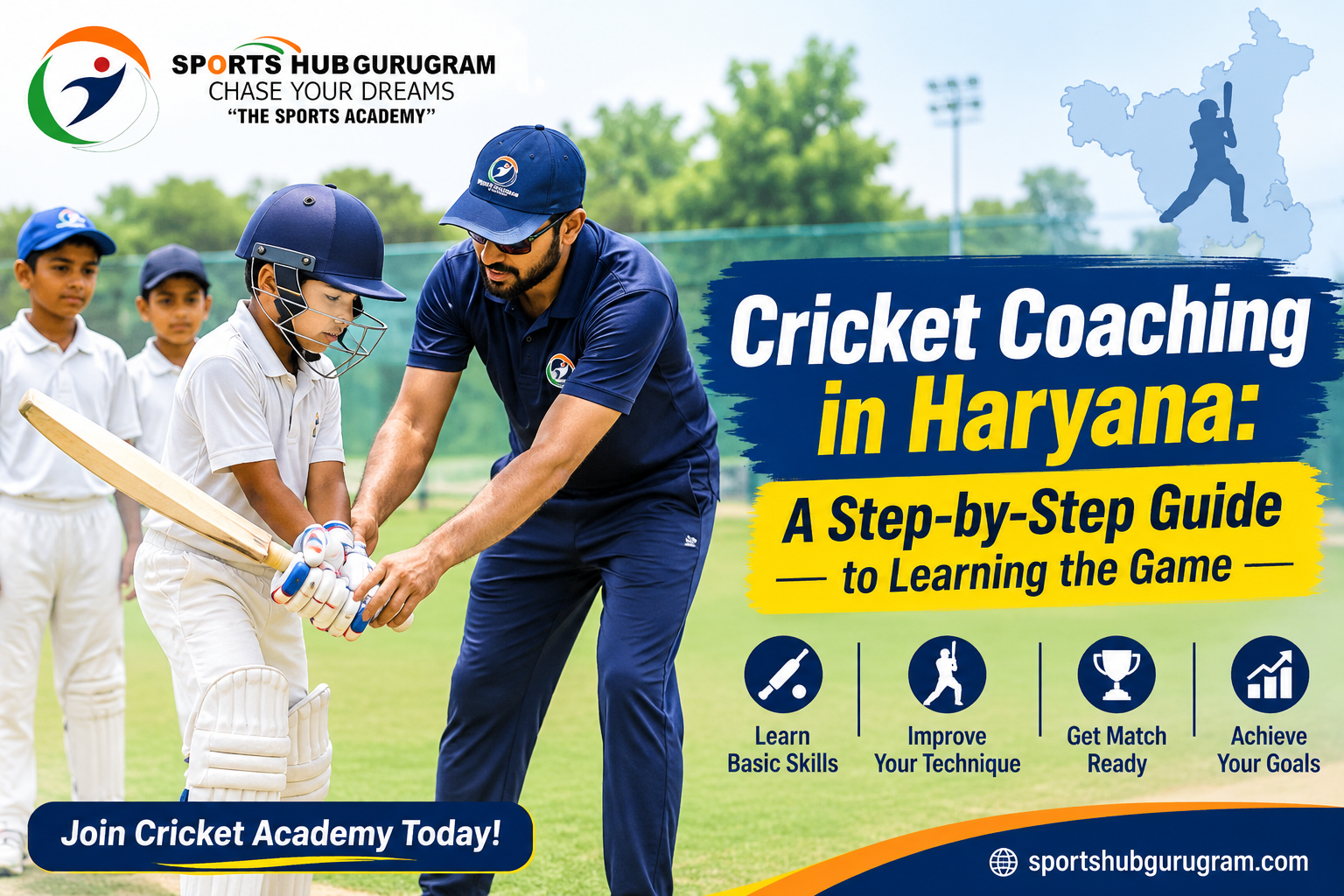
Cricket is one of the most popular sports in India, attracting children, teenagers, and adults who want to learn the game, improve their abilities, or build a career in professional cricket. In Haryana, interest in cricket creates opportunities for aspiring players to participate in organised training, school competitions, local tournaments, and academy-level coaching.
Becoming a confident cricket player requires more than simply picking up a bat and ball. Players need to understand the rules, develop correct techniques, improve physical fitness, practise regularly, and learn how to perform under match conditions. This is where professional Cricket Coaching in Haryana becomes important.
Whether your child is playing cricket for the first time or you are a beginner looking to improve your skills, joining a structured cricket training programme can provide the right foundation. Professional coaching helps players understand batting, bowling, fielding, teamwork, discipline, and match awareness.
For parents exploring a suitable Cricket Academy in Gurugram, choosing an academy with appropriate facilities, structured practice sessions, and a supportive environment can make the learning journey more effective. This guide explains how beginners can learn cricket step by step, what skills they should develop, and what to consider before enrolling.
1. WHY IS PROFESSIONAL CRICKET COACHING IMPORTANT?
Many children begin playing cricket in parks, playgrounds, schools, or residential communities. Informal games are a great way to develop an interest in the sport. However, players who want to improve need structured training and regular guidance.
Professional coaching helps players understand correct techniques from the beginning. Important benefits include:
Correct technique development: Coaches help players understand batting stance, grip, footwork, bowling action, throwing techniques, and fielding positions.
Improved physical fitness: Cricket training develops stamina, strength, flexibility, balance, and coordination.
Better game understanding: Players learn rules, match situations, field placements, scoring methods, and basic strategies.
Discipline and consistency: Regular training encourages players to follow schedules, respect coaches, and work towards improvement.
Confidence building: Learning new skills and participating in practice matches helps players become more confident.
Teamwork: Cricket teaches players to communicate, support teammates, and work towards a shared objective.
2. STEP ONE: UNDERSTAND THE BASICS OF CRICKET
Before learning advanced techniques, beginners should understand how cricket works. Cricket is played between two teams, with each team taking turns to bat and bowl. The batting team attempts to score runs, while the bowling and fielding team tries to restrict runs and dismiss batters.
Beginners should understand wickets, runs, overs, innings, ways a batter can be dismissed, basic fielding positions, and the responsibilities of batters, bowlers, and fielders. They should also become familiar with equipment such as bats, balls, wickets, batting pads, gloves, helmets, and protective guards.
A good coaching programme introduces these concepts gradually so children and beginners can understand the game without feeling overwhelmed.
3. STEP TWO: DEVELOP STRONG BATTING SKILLS
Batting requires patience, concentration, balance, timing, and regular practice. Beginners should master the fundamentals before attempting advanced shots.
Learn the correct batting grip: A comfortable and balanced grip helps players control shots and maintain stability. Coaches guide beginners on hand placement, grip pressure, and bat positioning.
Practise the batting stance: A proper stance helps players prepare for different deliveries. Beginners learn to maintain balance, position their feet, bend their knees slightly, and keep their eyes focused on the bowler.
Improve footwork: Players need to move forward, backward, or sideways depending on the delivery. Regular drills improve balance, movement, and shot selection.
Learn basic cricket shots: Beginners can start with defensive shots, straight drives, cover drives, pull shots, cuts, and flicks. Coaches introduce these progressively according to age, experience, and skill level.
Improve hand-eye coordination: Catching exercises, reaction drills, and controlled batting practice help players watch the ball and respond at the right moment.
A structured Cricket Coaching in Haryana programme should focus on these batting fundamentals before moving towards advanced techniques.
4. STEP THREE: LEARN BOWLING TECHNIQUES
A good bowler needs accuracy, control, consistency, fitness, and an understanding of different deliveries. Beginners should first learn a safe and controlled bowling technique under supervision.
Understand the bowling grip: The grip affects how the ball is released. Beginners learn the basic grip and how finger placement influences control.
Develop a consistent run-up: A controlled run-up helps bowlers maintain rhythm and balance. Coaches guide players on approach speed, body alignment, and foot placement.
Learn the bowling action: Players develop coordination between their arms, shoulders, legs, and body movements. Age-appropriate coaching and safe technique are particularly important for young fast bowlers.
Practise accuracy: Beginners should focus on bowling towards a target rather than trying to bowl as fast as possible. Target-based drills help develop line and length control.
Explore bowling styles: As players improve, they can learn fast bowling, medium-pace bowling, off-spin, leg-spin, and left-arm spin. The suitable style depends on natural ability, interest, physical development, and coaching guidance.
5. STEP FOUR: IMPROVE FIELDING AND WICKETKEEPING SKILLS
Fielding plays a major role in cricket. A strong fielding team can save runs, create opportunities for dismissals, and build pressure on the batting side.
Catching practice: Catching drills improve hand positioning, reaction time, concentration, and coordination. Beginners can start with close-range catches before progressing to higher and faster catches.
Ground fielding: Players learn to stop and collect rolling balls using correct body positioning, movement, and throwing technique.
Throwing accuracy: Target-based throwing drills improve arm coordination and accuracy, helping fielders return the ball quickly.
Wicketkeeping basics: Players interested in wicketkeeping should learn their stance, glove positioning, footwork, catching techniques, and movement behind the stumps.
Developing fielding skills alongside batting and bowling helps create more complete cricket players.
6. STEP FIVE: BUILD PHYSICAL FITNESS FOR CRICKET
Cricket requires strength, stamina, flexibility, balance, and agility. Players need fitness to run between wickets, bowl effectively, field for long periods, and maintain concentration.
A well-planned programme can include running and jogging for endurance, sprint drills for speed, agility exercises for quick changes in direction, balance exercises for stability, flexibility training for mobility, and suitable bodyweight exercises for general strength.
For young players, fitness programmes should be supervised and adjusted according to age and physical development. Excessive training should be avoided, and sufficient recovery is essential.
7. STEP SIX: LEARN THROUGH REGULAR PRACTICE MATCHES
Practising individual skills is important, but players also need opportunities to apply what they learn during actual games. Practice matches help beginners understand how cricket skills work in real situations.
During matches, players learn how to build an innings, when to defend or attack, how to select appropriate shots, how to bowl according to match situations, how to communicate with teammates, how to understand field placements, and how to handle pressure.
Practice matches also help coaches identify areas where players need additional attention. A good academy should provide suitable match-based activities according to each player’s age and skill level.
8. HOW TO CHOOSE THE BEST CRICKET ACADEMY IN HARYANA
Choosing the right academy is an important decision for aspiring players and their parents. The Best Cricket Academy in Haryana should offer more than a cricket ground. It should provide a structured learning environment where players can develop safely and progressively.
Experienced and knowledgeable coaches: Look for coaches who understand cricket fundamentals, have relevant coaching experience, communicate effectively, identify individual strengths, and provide constructive feedback.
Suitable cricket facilities: Check the condition and availability of practice pitches, nets, bowling areas, bats and balls, protective equipment, fielding spaces, and training equipment. Facilities should suit the age groups and training requirements of enrolled players.
Structured training programmes: Training should include batting, bowling, fielding, fitness, and match awareness. Beginners need fundamental training, while experienced players should have opportunities to develop advanced skills.
Safety and supervision: This is particularly important when choosing Kids Cricket Coaching in Gurugram. Parents should check whether children use suitable protective equipment and receive proper supervision during batting, bowling, and fielding sessions.
Convenient location and timings: Consider travel time, coaching schedules, batch timings, and whether the child can attend consistently.
Trial classes and admission guidance: A trial class allows children to experience the coaching environment. Parents can observe coach-student interaction, session organisation, and whether their child feels comfortable.
9. CRICKET ACADEMY IN GURUGRAM: WHAT SHOULD PLAYERS CONSIDER?
Gurugram is an important destination for families looking for organised sports coaching. When exploring a Cricket Academy in Gurugram, compare training environments rather than choosing based only on popularity or location.
Consider coaching methods, facilities, training opportunities, accessibility, batch sizes, safety arrangements, and whether programmes suit the player’s age and skill level. The right academy should match the player’s current ability, learning goals, and training requirements.
10. KIDS CRICKET COACHING IN GURUGRAM
Children often develop an interest in cricket after watching professional matches, playing with friends, or participating in school sports. Enrolling them in Kids Cricket Coaching in Gurugram can turn that interest into a structured learning experience.
Young players should initially focus on enjoying the game and understanding basic techniques rather than facing pressure to achieve immediate results.
A suitable junior programme should cover basic batting skills, bowling fundamentals, catching and fielding, age-appropriate physical development, teamwork, discipline, and confidence building. Coaches should encourage children to learn from mistakes and celebrate gradual improvement.
Every child develops at a different pace. Training should be adjusted according to individual abilities and physical development.
11. CRICKET CLASSES FOR BEGINNERS: WHAT SHOULD YOU EXPECT?
Beginner-level programmes introduce skills progressively. Players can expect to learn cricket rules and equipment, batting grip and stance, footwork and basic shots, bowling grip and action, catching and ground fielding, fitness, and supervised match practice.
Beginners should not expect to master every skill immediately. Improvement comes through repetition, regular feedback, and consistent practice. A good coach identifies areas that need improvement and provides manageable exercises.
12. HOW TO JOIN A CRICKET ACADEMY IN GURGAON
If you or your child are interested in learning cricket, comparing academies before enrolling can help you make a better decision.
Step 1: Identify your training goals. Decide whether you want to learn recreationally, improve existing skills, participate in competitions, or prepare for a professional cricket pathway.
Step 2: Research nearby academies. Compare location, facilities, coaching programmes, and available batches.
Step 3: Check coaching quality. Speak with the coaching staff. Ask whether individual feedback is provided and how progress is evaluated.
Step 4: Visit the training facility. Observe the ground, equipment, training arrangements, and supervision.
Step 5: Attend a trial class. A trial session helps you understand the coaching environment before making a financial commitment.
Step 6: Understand fees and schedule. Ask about admission fees, monthly or quarterly charges, equipment requirements, training frequency, and holiday schedules.
Step 7: Start training consistently. Follow the coaching schedule, practise regularly, and communicate with the coach about progress.
13. HOW LONG DOES IT TAKE TO LEARN CRICKET?
There is no fixed timeline because every player has different abilities, experience, fitness levels, and learning speeds. Consistent training can help beginners develop their skills over time.
A general progression includes an initial stage for rules, equipment, batting grip, stance, and basic bowling; a skill-development stage for batting, bowling, catching, throwing, and footwork; a practice stage for structured drills and supervised matches; an intermediate stage for consistency and match awareness; and a competitive stage for advanced techniques, fitness, and decision-making.
This is a flexible learning framework, not a guaranteed timetable. Players should progress according to their development and coaching guidance.
14. TIPS TO IMPROVE CRICKET SKILLS OUTSIDE ACADEMY SESSIONS
Academy coaching provides guidance, but individual practice also plays an important role.
Practise regularly: Short, focused sessions reinforce techniques learned during coaching.
Improve hand-eye coordination: Catching, controlled throwing, and reaction drills can improve coordination.
Watch professional cricket: Observing matches can help players understand batting approaches, bowling variations, field placements, and teamwork.
Maintain physical fitness: Follow suitable activities that improve stamina, flexibility, strength, and movement.
Set small goals: Work towards achievable targets, such as improving batting timing or bowling accuracy.
Listen to your coach: Feedback helps players identify mistakes and correct techniques.
Take proper rest: Recovery, sleep, hydration, and balanced nutrition are important parts of athletic development.
Parents should encourage children to enjoy practice rather than putting unnecessary pressure on them.
15. HOW PARENTS CAN SUPPORT YOUNG CRICKETERS
Parents play an important role in helping children develop a positive relationship with sports. Encouragement at home can help children stay motivated and consistent.
Parents can encourage regular attendance, provide appropriate equipment, appreciate effort and improvement rather than only match results, maintain a healthy balance between education and sports, allow children to enjoy learning, communicate with coaches, and ensure adequate nutrition, hydration, and rest.
Some children may want to play professionally, while others may prefer cricket as a recreational activity. Both goals deserve encouragement.
16. WHY CHOOSE SPORTS HUB GURUGRAM FOR CRICKET COACHING?
For parents searching for Cricket Coaching in Gurgaon, Sports Hub Gurugram is an option worth exploring. Established in 2021, Sports Hub Gurugram provides sports coaching opportunities for children and aspiring athletes through its sports programmes.
The academy offers coaching in six sports: Cricket, Football, Badminton, Basketball, Tennis, and Roller Skating.
Sports Hub Gurugram provides cricket coaching at its Sector 31 and Sector 48 locations, offering options for families looking for sports training in Gurugram.
What makes Sports Hub Gurugram worth exploring?
Multiple sports under one academy: Children can explore different sports and develop their interests in a multi-sport environment.
Cricket skill development: Beginners can work towards improving batting, bowling, fielding, coordination, and understanding of the game.
Training for young players: Sports coaching provides opportunities to develop discipline, teamwork, confidence, and physical fitness.
Convenient locations: Sector 31 and Sector 48 provide options for families in different parts of Gurugram.
Free trial class: Parents and children can enquire about a free trial class to experience the coaching environment before enrolment.
Whether your child is beginning their cricket journey or wants to develop existing skills, selecting a suitable training programme is an important first step.
Website: sportshubgurugram.com
Conclusion
Learning cricket is a rewarding journey that develops physical fitness, discipline, teamwork, confidence, and decision-making skills. Becoming a better player requires regular practice, correct techniques, professional guidance, and a positive learning environment.
Choosing the right Cricket Coaching in Haryana programme can help beginners understand the game and develop their abilities step by step. From learning batting and bowling techniques to improving fielding, fitness, and match awareness, structured coaching provides a foundation for long-term development.
For parents exploring Kids Cricket Coaching in Gurugram, it is important to consider coaching quality, facilities, safety, training schedules, and opportunities for practical match experience.
Sports Hub Gurugram offers cricket coaching at Sector 31 and Sector 48, along with five other sports programmes. With a focus on sports participation and skill development, it provides an opportunity for children to explore their sporting interests.
Start with the fundamentals, practise consistently, and enjoy every stage of your cricket journey.
Frequently Asked Questions
1. What is the best age to start cricket coaching in Haryana?
Children can begin learning basic cricket skills at an early age, depending on their interest, physical readiness, and coordination. Beginner programmes introduce batting, bowling, and fielding through age-appropriate activities.
2. How can I find the Best Cricket Academy in Haryana?
Compare coaching experience, training facilities, practice opportunities, safety arrangements, batch sizes, and admission fees. Visiting the academy and attending a trial class can help you make an informed decision.
3. Which skills should beginners learn in cricket?
Beginners should focus on batting grip, stance, footwork, basic bowling action, catching, throwing, ground fielding, and cricket rules. Fitness and teamwork should also be included.
4. How do I join a cricket academy in Gurgaon?
Research nearby academies, compare programmes, visit the facilities, enquire about fees, and attend a trial session if available. Complete the admission process and follow the training schedule.